Source
Supabase live template
Delivery
Prepared email
Prepared, not sent yet
Updated
May 1, 2026
Visuals
4 image assets
Version 2. rewrote Day 13 for model-routing judgment and added three branded visuals
Main Context
AI Orientation
Day 13: Specialist models and picking the right tool
Day 13: Stop asking one model to be great at everything
What you'll see today:
- Why different models have different strengths
- When a specialist tool beats a general chatbot
- How to choose based on task, not hype
- Why “best model” is usually the wrong question
- Your action: match one task to a better-fit tool
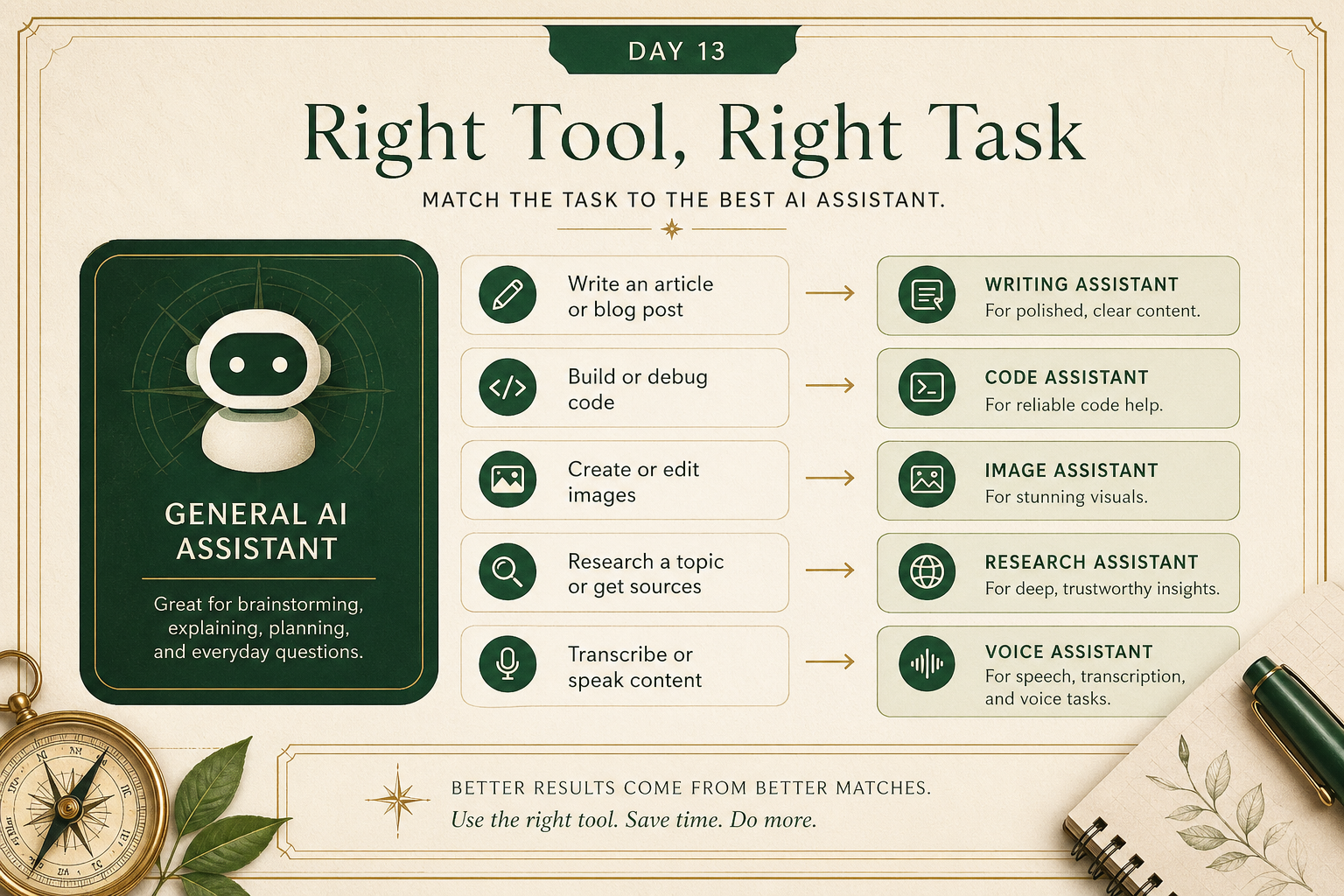
A beginner instinct is to look for one winner.
One best model. One best app. One best tool.
That is understandable.
It is also usually the wrong framing.
The better question is:
What is this task asking for?
Today is about moving from brand loyalty to tool judgment.
1) General models are flexible. Specialist tools are sharper.
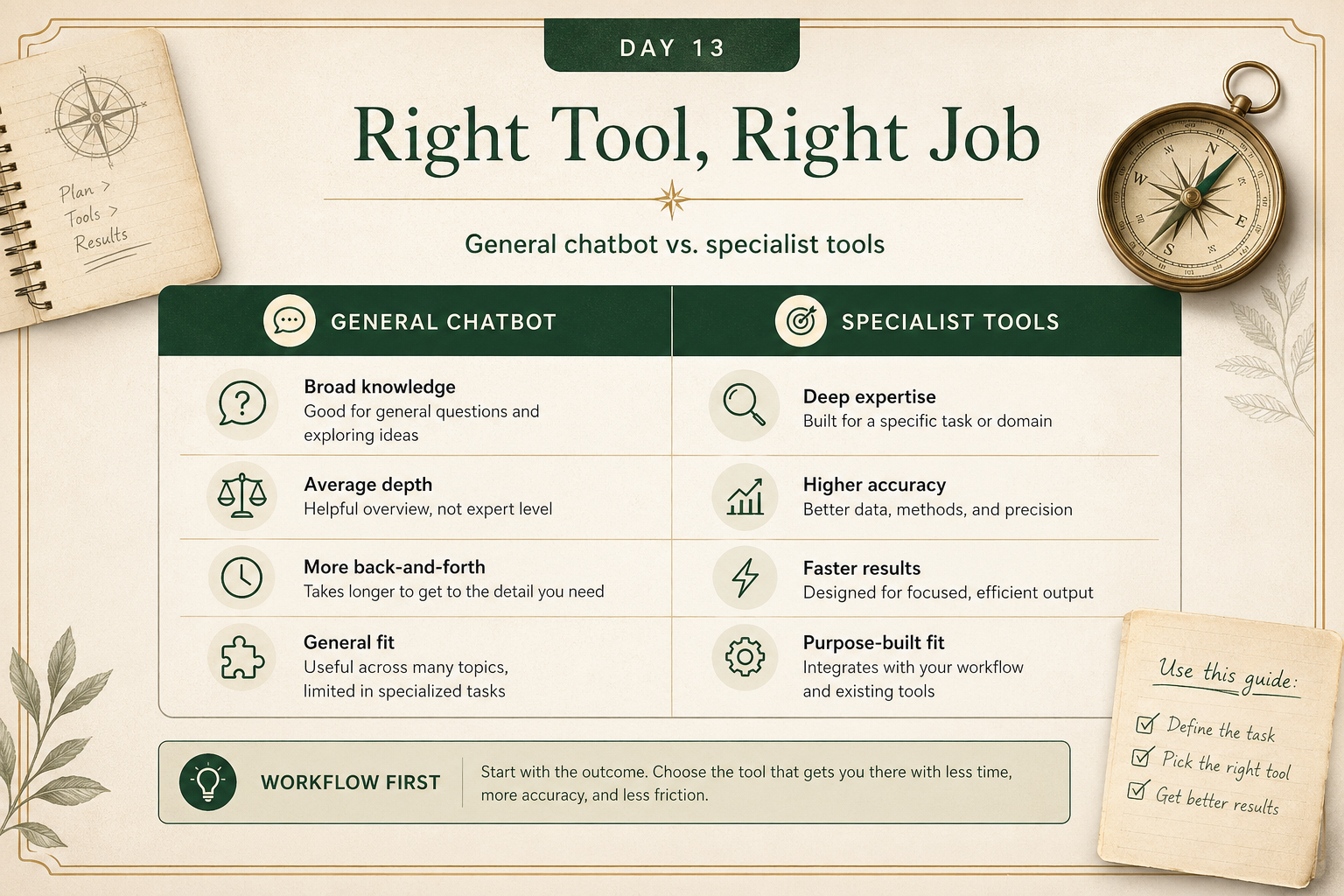
General chat tools are great because they can do many jobs reasonably well.
But sometimes a specialist tool is better because it is optimized for one kind of work:
- transcription
- research
- coding
- image generation
- document analysis
- voice interaction
That does not always mean the specialist is universally smarter.
It means the workflow fit is better.
2) Choose by task, stakes, and output format
A simple way to choose:
Ask:
- Is this mostly writing, analysis, coding, image, or audio work?
- Do I need citations?
- Do I need long context?
- Do I need structured output?
- Is the cost of being wrong high or low?
That gives you a much better answer than “which model is coolest this week?”
For example:
- source-grounded research → research-oriented tool
- long-document synthesis → model with strong context handling
- image generation → image model
- spoken conversation → realtime voice tool
3) The real skill is routing
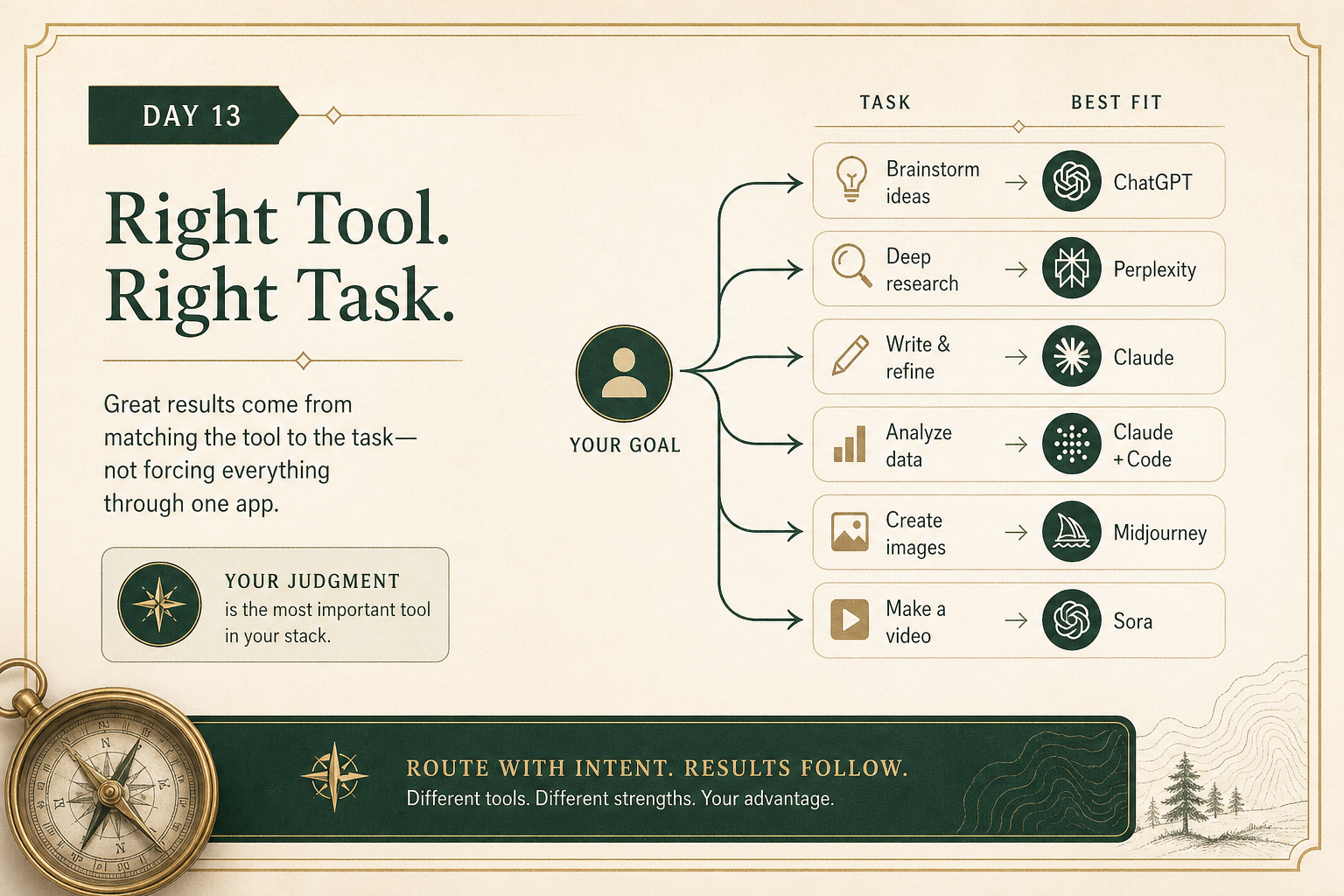
An advanced beginner move is routing.
That means:
- use one tool for research
- another for writing
- another for images
- another for transcription
Not because you love tool chaos.
Because each one is better suited to a different step.
This is often how good real-world workflows emerge.
Not one magic tool.
A good sequence of tools.
Your action for today
Pick one real task you do often.
Then answer:
- what the task is
- what tool you normally use
- what another better-fit tool might be
- why you think it may fit better
Reply with your reasoning.
I’ll tell you:
- whether the task-tool match makes sense
- where your current setup is weak
- whether a specialist tool would actually help or just add complexity