Source
Supabase live template
Delivery
Sent email
Last sent May 9, 2026
Updated
May 1, 2026
Visuals
4 image assets
Version 2. rewrote Day 7 for source-grounded research habits and added three branded visuals
Main Context
AI Orientation
Day 7: AI research, citations, and better judgment
Day 7: Use AI for research without getting fooled by confident nonsense
What you'll see today:
- Why AI search feels better than ten blue links
- The difference between finding sources and synthesizing them
- Why citations matter more than confidence
- How to ask for a counterargument instead of a one-sided answer
- Your action: run one real research question the right way
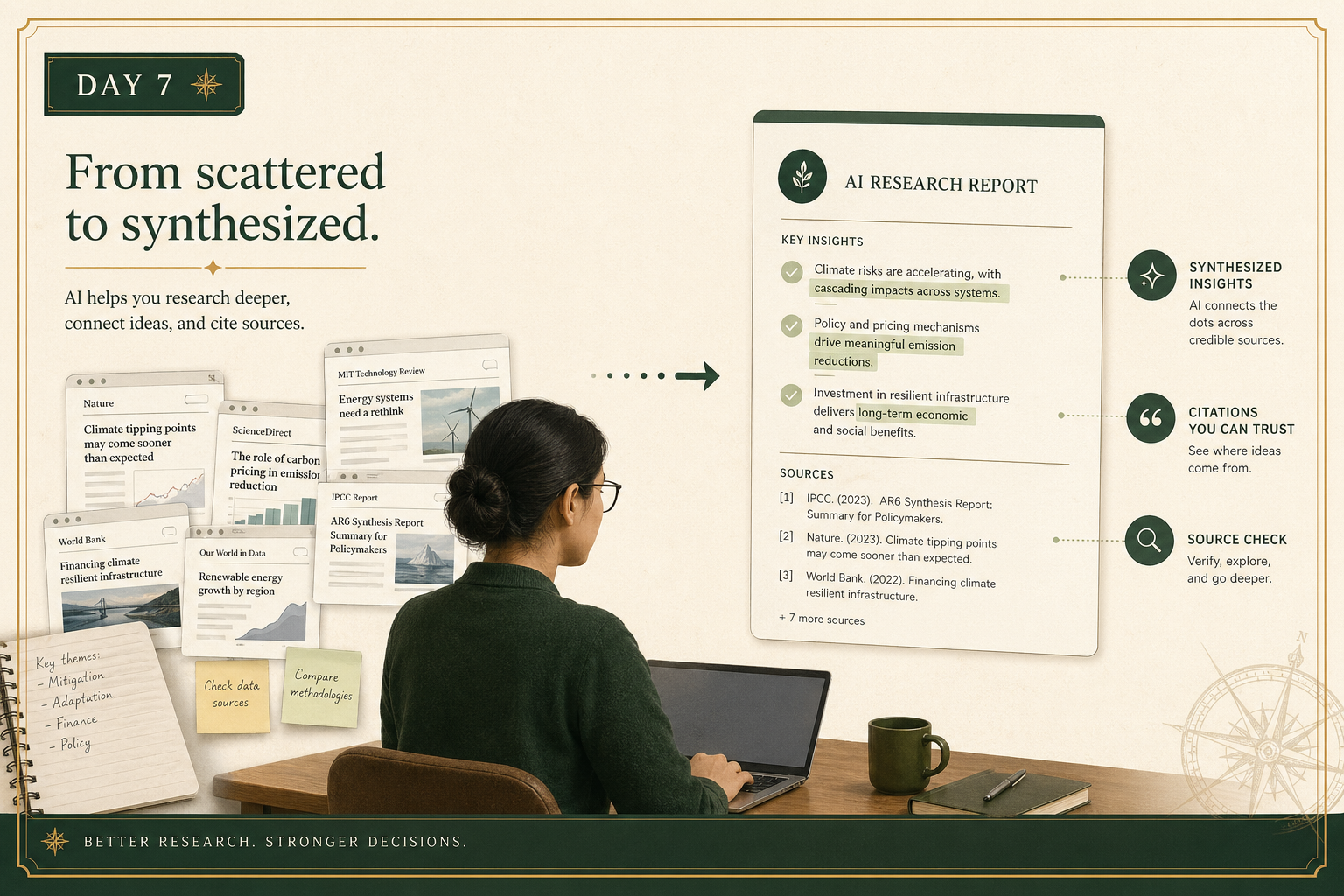
A lot of people have already felt this shift:
instead of opening five tabs and piecing together an answer manually, they ask an AI tool to search, read, and summarize for them.
That can be genuinely useful.
But it creates a new risk:
people start trusting the summary more than the sources.
Today is about using AI for research without turning your judgment off.
1) AI research is not just search with nicer wording
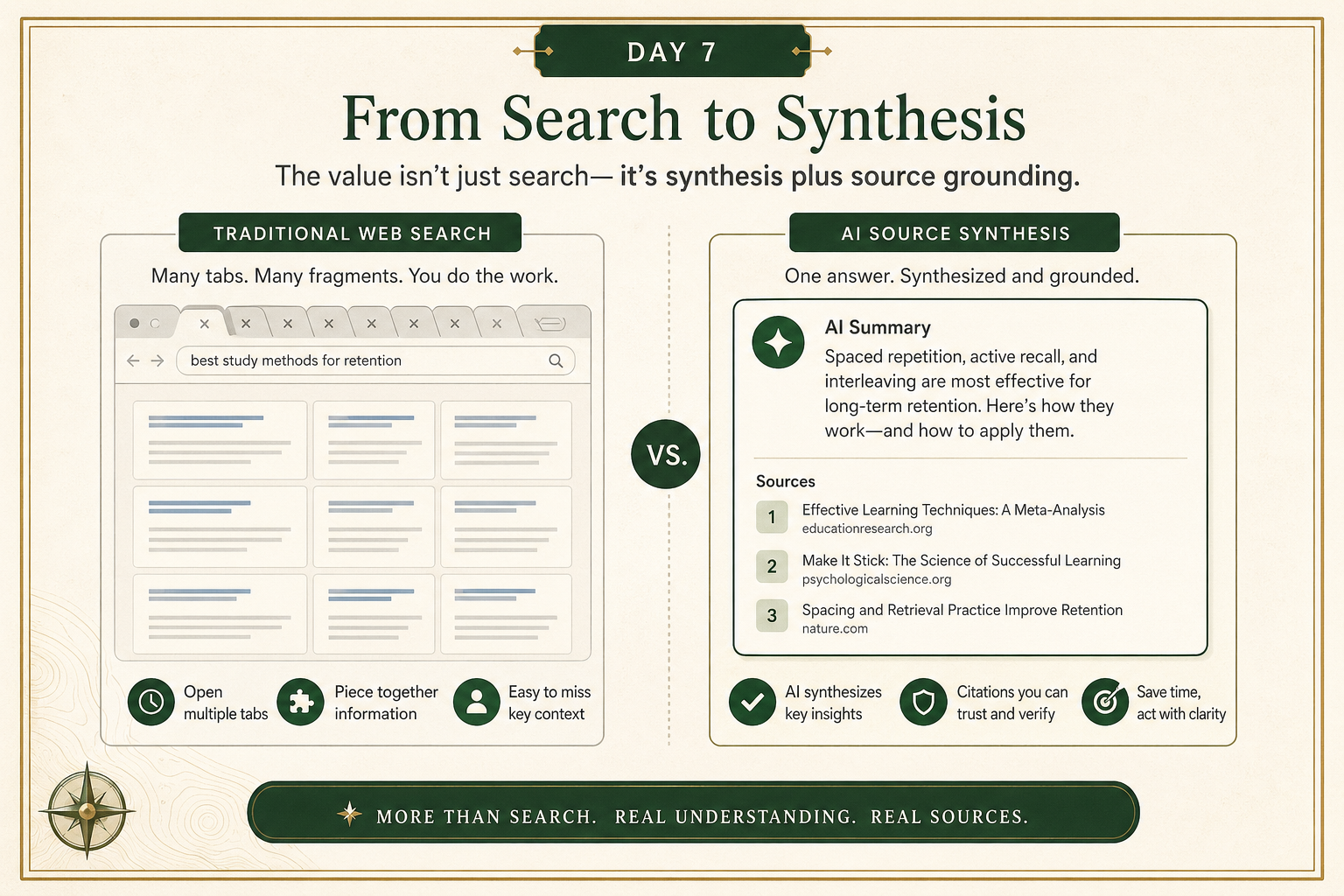
The useful part of AI research is not just speed.
It is the combination of:
- finding relevant sources
- reading across them
- pulling out patterns
- synthesizing the answer into one response
That is different from normal search.
But the big rule is this:
a smooth answer is not enough.
If the question matters, you need to know where the answer came from.
A practical habit:
if the tool cannot show its sources clearly, trust it less.
2) Ask for citations, then ask for disagreement
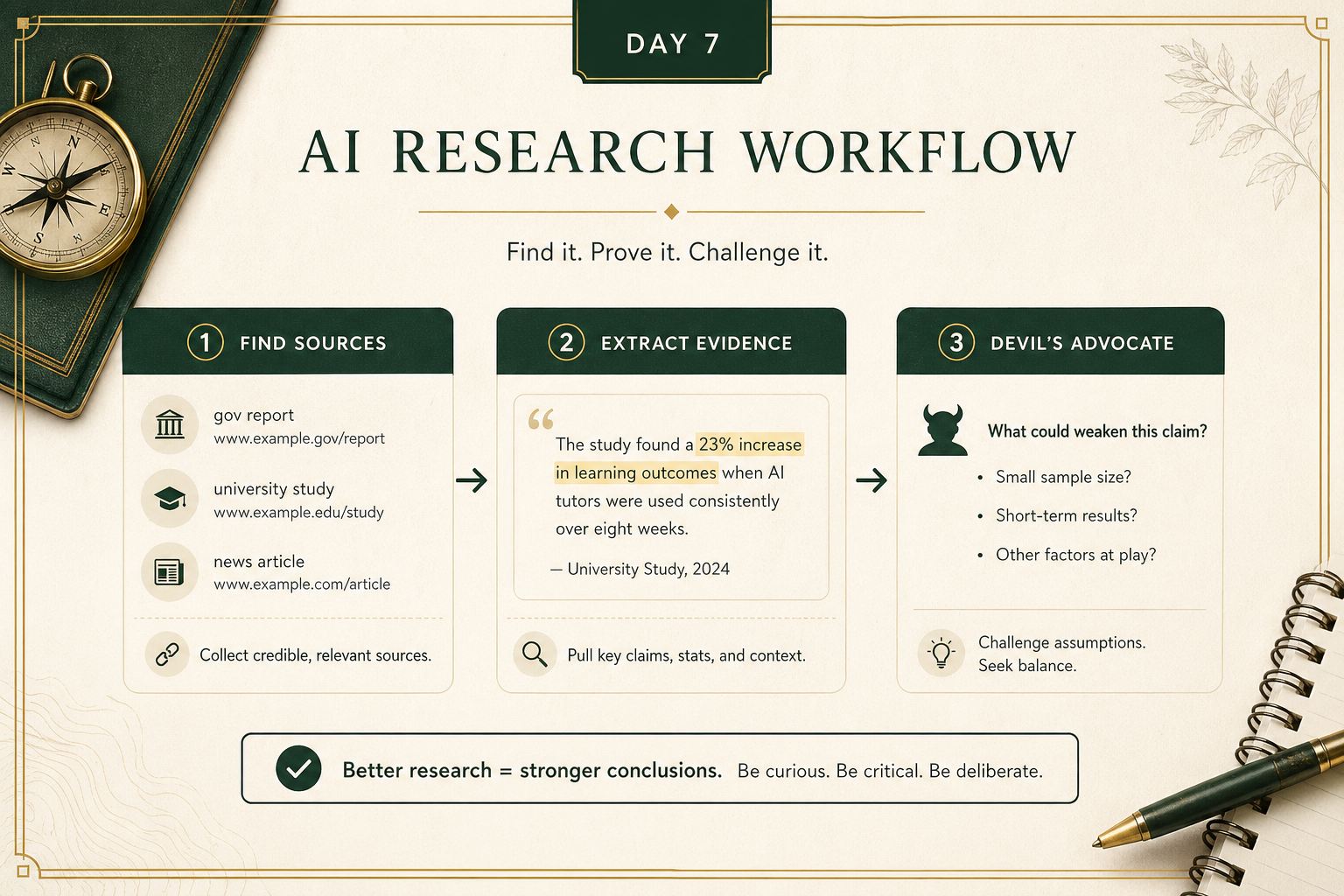
A strong beginner research prompt usually asks for two things:
- citations
- a counterargument
Why?
Because AI tools are often very good at building a clean narrative.
They are less naturally honest about uncertainty unless you ask.
A better prompt sounds like this:
“Research this question using reputable sources. For each important claim, show the source. Then tell me the strongest reason your answer might be wrong, incomplete, or biased.”
That small second step matters a lot.
It reduces the chance that you walk away with a polished but one-sided conclusion.
3) Use AI research for hard questions, not just quick trivia
Good AI research use cases:
- comparing vendors
- checking policy changes
- understanding a market
- researching a purchase with tradeoffs
- summarizing a technical topic from multiple sources
- getting oriented fast before you go deeper yourself
Bad use cases:
- trusting a single answer on a high-stakes legal or medical decision
- accepting uncited claims because they sound polished
- letting the tool decide what matters without checking the evidence
The right posture is:
use AI to accelerate the first pass, not replace source judgment.
Your action for today
Pick one real question you actually care about.
Examples:
- What are the best AI note-taking tools for internal meetings?
- Is a certain market growing or shrinking?
- What are the strongest arguments for and against a policy or product decision?
Use a prompt like:
“Research this question. Cite the sources for your main claims. Then give me the strongest counterargument or alternative interpretation of the evidence.”
Reply with:
- the question you researched
- the exact prompt you used
- one surprising claim the model made
- the source it used for that claim
I’ll tell you:
- whether the research setup was solid
- whether the source looked credible
- where you should still be skeptical